
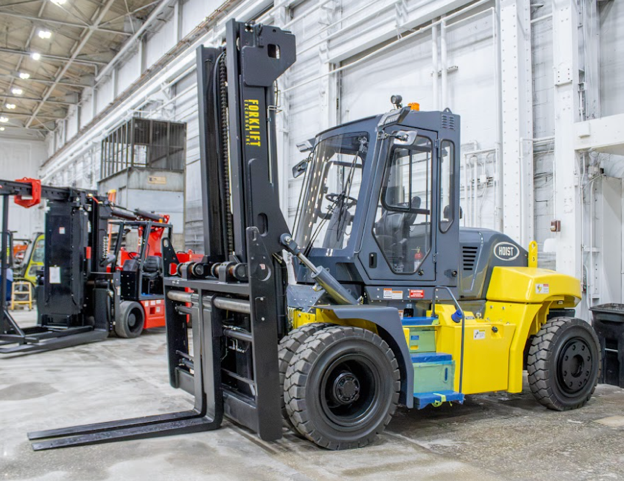
When a Bigger Forklift Isn’t the Better Forklift
One of the most memorable conversations I’ve had during my career started with a customer who called looking for a 40,000-pound forklift.
After about twenty minutes discussing his operation, I told him something he wasn’t expecting: “I don’t think you need a 40,000-pound forklift.” He laughed and replied, “You’re the first forklift salesman who’s ever tried to sell me a smaller machine.”
That conversation illustrates one of the biggest misconceptions in material handling: bigger is not always better.
Bigger Isn’t Always Better
Higher-capacity forklifts generally cost more to purchase, transport, maintain, fuel, and repair. If your application doesn’t require the additional capacity, those costs become unnecessary operating expenses.
Capacity Is Only One Part of the Equation
Before recommending equipment, I ask about load weight, load dimensions, lift height, indoor/outdoor use, operating hours, and the type of material being handled. Those answers determine the correct forklift far more accurately than simply choosing a larger capacity.
Comments are closed