

When a heavy-capacity forklift starts misfiring, losing power, or running inconsistently, the problem may be coming from somewhere you wouldn’t immediately suspect: the fuel tank.
Water in a diesel fuel system can cause serious performance issues, damage sensitive fuel system components, and lead to expensive repairs if the contamination isn’t addressed quickly.
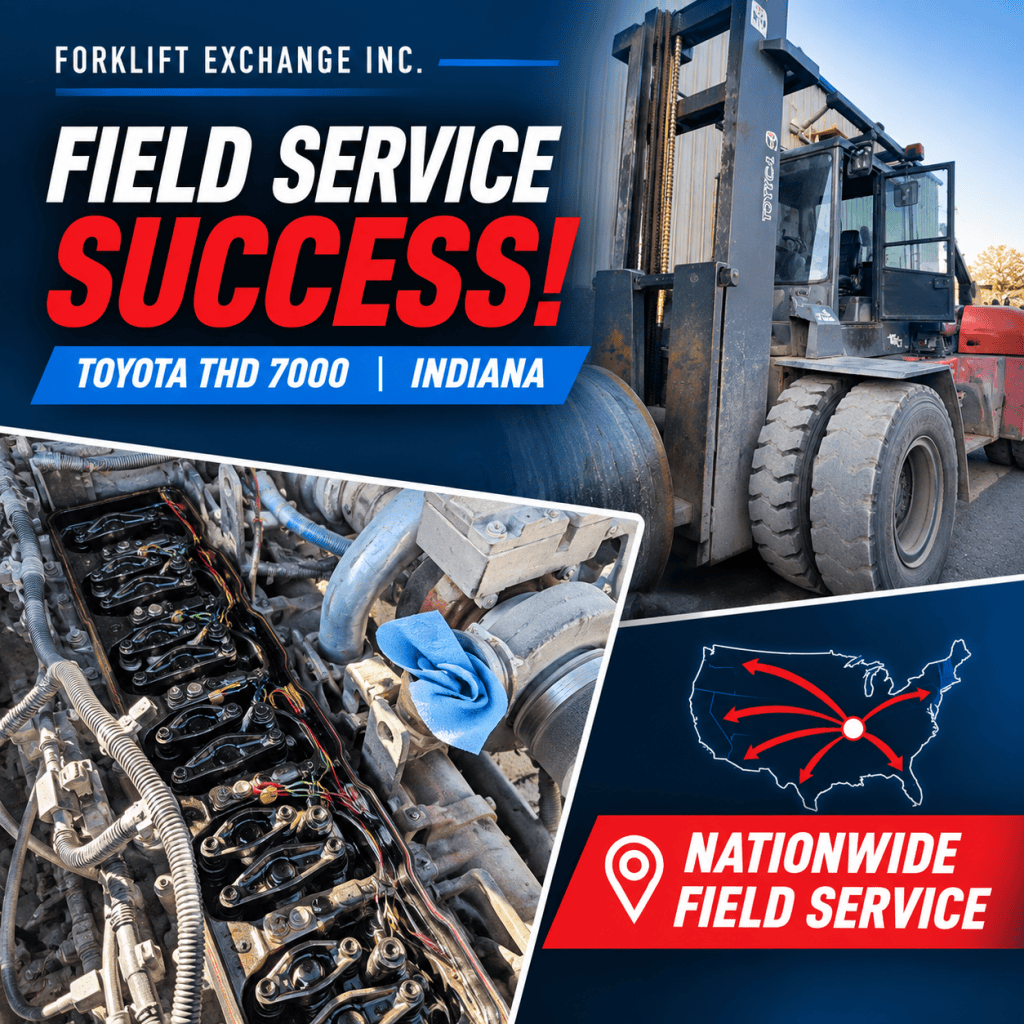
Last Wednesday, Forklift Exchange dispatched our remote service technician, Jeremy, to Indiana to troubleshoot a Toyota THD 7000 experiencing engine misfires.
The cause? Water had passed through the truck’s fuel system, damaging the fuel injectors.
After replacing the affected injectors, Jeremy got the Toyota THD 7000 running smoothly again.
This repair is a useful reminder of why proper fuel management and preventive maintenance are essential for keeping heavy-capacity forklifts operational.
Water contamination is a common concern for diesel-powered industrial equipment, particularly machines operating outdoors, in demanding environments, or with fuel stored on-site.
Water can enter a diesel fuel system through several sources:
Even relatively small amounts of water can create problems, especially in modern high-pressure diesel injection systems.
Diesel fuel does more than power the engine. It also helps lubricate and protect precision components within the fuel injection system.
When water enters the system, it can interfere with that protection and cause several problems.
Fuel injectors operate with extremely tight internal tolerances. Water contamination can contribute to corrosion, wear, and poor injector operation.
Damaged injectors may deliver fuel incorrectly, resulting in engine misfires, rough operation, reduced power, and difficulty starting.
This was the problem Jeremy addressed during our recent Toyota THD 7000 service call in Indiana.
Water reduces the lubricating protection normally provided by diesel fuel. In systems where fuel lubricates the injection pump, contamination can accelerate internal wear and potentially lead to pump failure.
Water can promote rust and corrosion in metal fuel system components, including tanks, lines, and injection equipment.
Corrosion particles can also travel through the system and contribute to additional restrictions or damage.
Water contamination can contribute to filter restrictions, particularly when corrosion, sediment, or microbial contamination is present.
Restricted fuel flow can lead to poor engine performance, hesitation, and loss of power.
For operations that rely on heavy-capacity forklifts, an unexpected breakdown can interrupt production, delay material handling, and affect scheduled work.
A fuel system issue that begins with inconsistent engine performance can become a much more expensive repair if the equipment continues operating.
If you suspect water contamination, taking the right steps early can help minimize additional damage.
DO:
DON’T:
Important: Diesel injection systems can operate at extremely high pressures. Diagnosis and repair of high-pressure components should be performed by qualified technicians.
Preventive maintenance is often significantly less expensive than repairing a damaged fuel injection system.
Here are several practices that can help reduce the risk.
Follow the forklift manufacturer’s recommended inspection and draining intervals. Equipment operating in high-moisture environments may require additional attention.
Keep bulk diesel storage tanks properly maintained, inspect for accumulated water, and make sure fuel transfer equipment is protected from contamination.
Damaged or poorly sealed fuel caps can allow moisture to enter the tank. Inspect these components regularly, especially on forklifts operating outdoors.
Fuel filters play an important role in protecting the injection system. Use the correct replacement filters and follow the manufacturer’s maintenance recommendations.
Rough idling, hard starting, misfires, reduced power, and unusual engine behavior should be investigated before the problem becomes more severe.
Routine inspections by experienced service technicians can help identify fuel contamination, worn components, and other developing problems before they cause extended downtime.
Our recent service call is a practical example of how quickly a fuel system issue can affect a heavy-capacity forklift.
After water passed through the fuel system of a customer’s Toyota THD 7000, the truck began experiencing engine misfires.
Forklift Exchange remote service technician Jeremy traveled to the customer’s location in Indiana to address the problem.
The repair involved installing replacement fuel injectors. Once the new injectors were installed, the engine was running smoothly again.
Another successful field service repair, helping a customer get valuable equipment back to work!
At Forklift Exchange, our work doesn’t stop when a forklift leaves our facility.
Our experienced service team supports heavy-capacity forklifts from multiple manufacturers, including Toyota, Hoist, Royal Rig-N-Lift, Versa-Lift, Taylor, Hyster, and other major brands.
From fuel system troubleshooting and engine repairs to preventive maintenance and complete equipment rebuilds, we help customers keep their equipment operating reliably.
Whether your forklift needs attention at your facility or requires more extensive work at our service shop, our team is ready to help.
Experiencing forklift performance problems or looking for professional heavy-capacity forklift maintenance?
Learn more about Forklift Exchange’s nationwide service capabilities and contact our team to discuss your equipment needs.
Comments are closed