
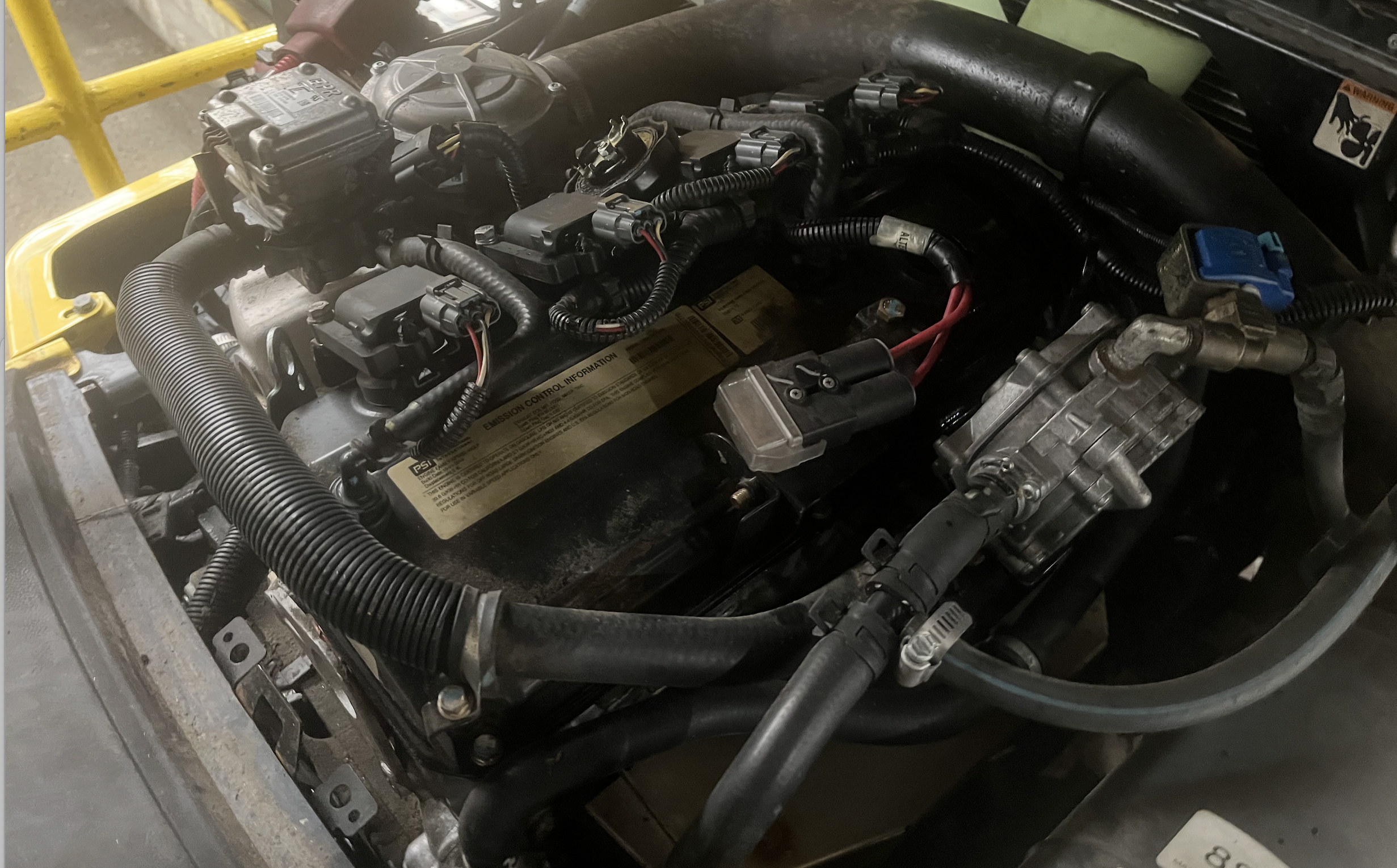
One of the biggest misconceptions in the used forklift market is that low hours or new paint means it’s a good truck.” Not necessarily. I’ve seen forklifts with 3,000 hours that were completely abused and others with 12,000+ hours that are still operating beautifully.
Because when it comes to used forklifts, condition matters far more than the number on the meter. After years around used equipment, there are certain red flags I look for immediately when inspecting a forklift and they can tell you a lot about how that truck was treated.
This is one of the first places I look.
A forklift’s mast tells the story of its workload. Heavy abuse, overloading, and poor lubrication show up here quickly. You can often get a good idea on how much stress was upt on thi machine over its life through the Mast & Chain Wear.
Mast repairs aren’t cheap and can create long-term operational issues. Excessive chain wear is something many inexperienced buyers completely overlook.
A little dirt is normal. But fresh hydraulic oil everywhere? That’s different.
Leaks often indicate that there has been deferred maintenance, worn seals and/pr high operating stress. Small leaks tend to become large repairs quickly.
Forklift tires reveal operator habits fast.
Aggressive operators spin tires, slam direction changes and abuse braking systems. Its well known this happens and the tires show it. Abnormal wear patterns can also indicate steering issues, alignment problems, and suspension or axle wear. None of which you want to ignore.
This is a huge one.
If a truck hesitates shifting, that indicates a very expensive repair incoming. Especially on larger IC trucks, high-hour units & heavy-capacity forklifts. The Transmission can quickly become an item that causes the repair costs to balloon and lead to a loss on the equipment.
It’s entirely possible on used electric forklifts that the value of the machine is almost entirely in the battery. This is in part because without a good working battery, the truck is a paperweight.
Electrical issues are often time-consuming to diagnose. Not only that but they typically require specialized technicians. Your regular forklift mechanic will not be able to work on these. This is one of the things that drives up repair costs on these machines. But most of all these are signs of neglected maintenance. This is especially common on electric vehicles as it’s often mistakenly assumed there is no preventative maintenance if there’s no combustion engine to maintain. This couldn’t be further from the truth.
As I just mentioned, a battery can completely change the value of an electric forklift.
Even a weak battery may still “work” during a short inspection but it can still fail under real operating conditions. To be safe, ask if you can operate it with a load to move. Replacement batteries are not cheap.
This is where experience matters most.
Cracks and poor repairs can indicate that the forklift was being overloaded or was in any accidents. Eitehr way both are good indicators of Sever Abuse. Sometimes a freshly painted forklift is hiding a rough history underneath.
This surprises people. Sometimes a forklift that’s too clean makes me cautious.
That doesn’t mean it’s bad, but it means I inspect deeper. Coming up in the forklift world, this was sometimes referred to as “Lipstick on a pig”. And there are plenty of people out there who think a new coat of paint hides all the defects.
Note: It does not.
When evaluating a used forklift, don’t just ask, hw many hours does it have? Ask, How was this machine actually used? Because that’s where the real answer is.
Call – Text – WhatsApp
630-842-0779
Jasonf@forkliftexchange.com
www.Forkliftexchange.com
Special Note: If you’re still reading, like and share. It’s appreciated. If you’re evaluating used equipment and want a second set of eyes on a machine, I’m always open to helping. This is one of those areas where experience can save a buyer from a very expensive mistake. Send me a message.
#Forklifts #MaterialHandling #WarehouseOperations #Leadership #SupplyChain #UsedEquipment #Logistics #OperationsManager #Safety #UsedEquipment #IndustrialEquipment #highcapacity #heavyequipment
Comments are closed