
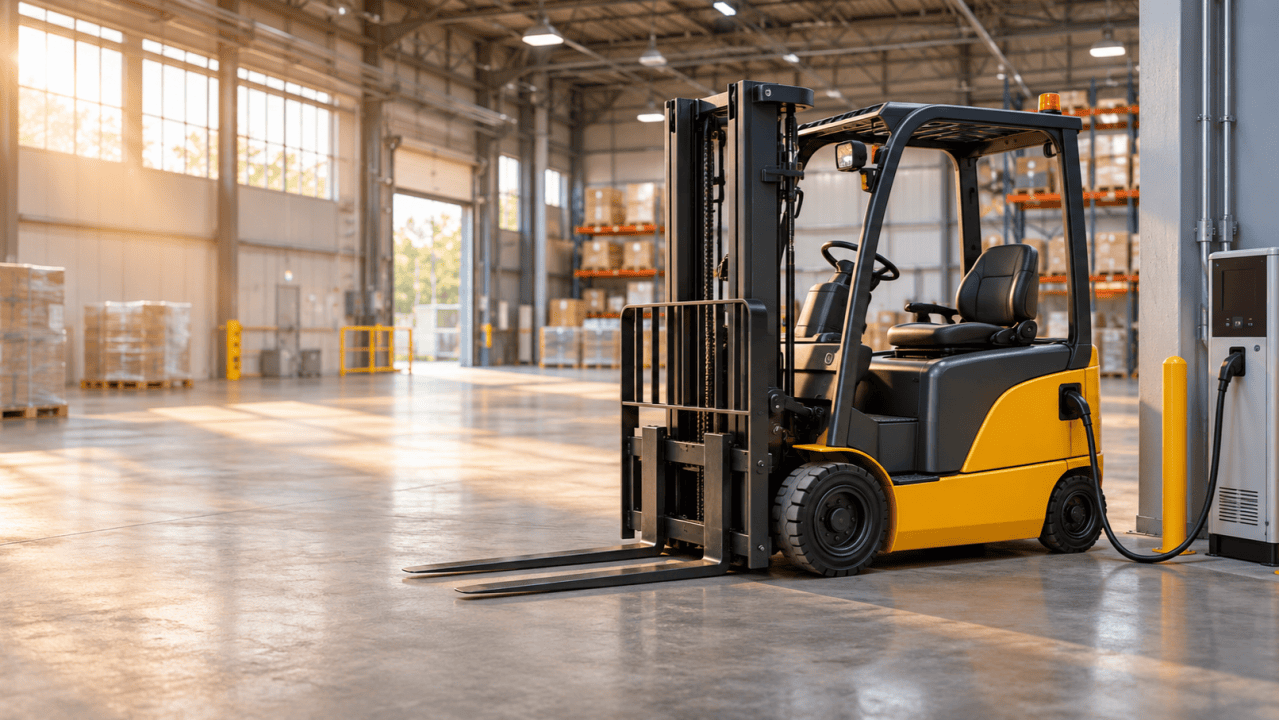
It’s 2:30 in the afternoon, and the shipping department has a problem.
The electric forklift has been moving pallets since the morning. Orders are lined up, a truck is waiting at the dock, and the operator notices that the battery indicator is getting low.
Someone asks, “Wasn’t it charged last night?”
The answer is yes.
The more useful question is whether the battery had enough time to charge—and whether the charging plan still fits the work the forklift is doing.
An electric forklift can be a dependable part of an operation, but the truck, battery, charger, and schedule must all work together. When one part of that plan changes, the problem may not show up until the busiest part of the day.
Most managers know when the electric forklift is needed. They know when the first shift starts, when the trailers arrive, and which jobs require the truck.
The battery needs a schedule, too.
It has to provide enough energy for the work, return to the charger at the right time, and receive the charging and maintenance specified for that particular system. Depending on the battery and charger, the plan may also need to allow time for cooling or other manufacturer-directed procedures.
That becomes more complicated when a truck starts working longer hours.
An electric forklift that once ran for a single shift may now be used by a second crew. A warehouse may have added a production line, extended shipping hours, or assigned heavier work to the same machine. The truck may still look like the right size for the job, but its energy plan deserves another look.
If the workday gets longer while the charging window gets shorter, something eventually has to give.
Plugging in the forklift is an important step. It is not, by itself, proof that the battery received the charge it needed.
Was the charger connected correctly? Did the charging cycle finish? Did the charger display a fault? Was the truck taken back into service before the process was complete?
Those are practical questions, and they can save a lot of guesswork.
Imagine that a forklift is plugged in at the end of the evening shift, but the morning crew needs it again a few hours later. The charger may be working exactly as designed, yet the battery may not have enough time to complete the planned cycle.
On the other hand, a truck that used to make it through the shift and now consistently falls short may have a battery, charger, truck, or application issue that needs investigation. A low charge indicator alone doesn’t identify which one.
Start by documenting what happened: when charging began, what the charger displayed, when the truck returned to work, and when the low-charge indication appeared. Give the service team a timeline instead of asking them to guess from the end result.
One of the easiest mistakes in an electric fleet is assuming that every battery can be treated the same way.
A flooded lead-acid battery has different maintenance needs from a sealed battery or a lithium-ion system. Chargers and battery-management systems also differ. The right charging procedure depends on the equipment actually installed, its manufacturer’s instructions, and how the operation uses it.
For example, some battery and charger combinations are designed for opportunity charging—charging during breaks or other pauses in the workday. That can be useful in the right application, but it should be part of a system designed and approved for that routine.
A short break does not automatically make every battery an opportunity-charging battery.
Before changing the routine, ask the battery and charger suppliers whether the equipment is compatible with the intended schedule. Explain how many shifts the truck works, when breaks occur, and how long the forklift can remain at the charger.
A charging plan should be built around the actual equipment and the actual workday—not a rule someone remembers from a different truck.
A battery charger may spend its day mounted on a wall, but it deserves more attention than a piece of furniture.
It needs to be compatible with the battery, properly installed, protected from damage, and used according to its instructions. The facility also needs the appropriate electrical supply and a charging location suited to the equipment and the work being performed there.
When evaluating a used electric forklift, I recommend asking about the battery and charger early in the conversation. Are they included? Are they compatible with each other? What electrical service does the charger require? Is the intended charging space suitable?
An electric forklift can be a good fit for the load and the building, yet still create a surprise if nobody has planned where and how it will charge.
The same applies when adding a truck to an existing fleet. The charger already on the wall is not automatically the right charger for the new battery. Confirm the details with the equipment suppliers before connecting anything.
Two electric forklifts can work the same number of hours and place different demands on their batteries.
One might spend much of the day moving light pallets short distances. Another may travel farther, lift more frequently, handle heavier loads, or work through fewer pauses. Cold conditions and other application factors can also affect the way a battery performs.
That is why an old estimate of “one charge lasts a shift” may no longer be useful after the job changes.
Look at the operation as it exists today. How far does the truck travel? How often does it lift? Are loads heavier than they were when the truck was selected? Has the shift length changed? Is the battery nearing the end of its useful service?
The answers help a qualified service provider evaluate whether the issue is the battery’s condition, the charging routine, the truck’s workload, or a combination.
A battery that falls short should not automatically be condemned. But a pattern of falling short should not be ignored, either.
If your fleet uses flooded lead-acid batteries, watering is part of the maintenance plan. Trained personnel should do it using the manufacturer’s instructions and the facility’s safety procedures.
In general, these batteries are watered after charging and cooling. There can be exceptions when plates are exposed before charging, so follow the battery manufacturer’s procedure rather than apply a universal rule.
Use the specified water and level. Adding too much can cause electrolyte to overflow; allowing levels to remain too low can damage the battery. A routine maintenance record helps show when the battery was checked, watered, and serviced.
Just as important, not every battery is designed to be watered. Sealed batteries and lithium-ion systems have different requirements. If the people responsible for the equipment are unsure what type of battery is installed, identifying it is the first step.
“Add water” is not a maintenance plan for an unknown battery.
A charging station is sometimes treated like an out-of-the-way parking spot. In reality, it is an active work area with its own hazards.
Flooded lead-acid batteries contain corrosive electrolyte, and charging can produce hydrogen gas. Batteries are also heavy, and electrical connections can create hazards if equipment is damaged or handled incorrectly.
OSHA requires battery charging installations to be located in designated areas. The applicable charging and battery-handling requirements depend on the operation, including whether batteries are only charged or are also changed or serviced. Facilities should follow the applicable requirements, manufacturer instructions, and site procedures for ventilation, fire protection, spill response, emergency equipment, and protection of charging apparatus.
People assigned to charge, change, or service batteries need appropriate training. If a connector is damaged, a charger displays a fault, electrolyte is leaking, or something looks or smells unusual, report it and follow the site’s procedure. Don’t improvise a repair to keep the forklift moving.
If a battery needs to be changed, remember it is a substantial load in its own right. Use the proper equipment and procedure. This is not a job for a couple of people pulling on whatever happens to be nearby.
Some operations use a spare battery to keep a truck working across multiple shifts. That can be an effective arrangement when the truck, batteries, changing equipment, and facility are set up for it.
But a spare battery sitting in the corner is not the same as a ready battery.
It needs its own plan for charging, maintenance, inspection, and recordkeeping. The operation also needs trained personnel and a safe way to remove and install it. An uncharged, incompatible, damaged, or overdue battery will not solve the afternoon problem.
Ask a simple question: If the working battery needed to be changed right now, could the team do it safely and put a suitable, ready battery into the truck?
If the answer is uncertain, the backup plan deserves work before you need it.
You don’t need a complicated system to start seeing a pattern.
For each truck and battery, record the equipment identification, battery type, charger, typical charging window, service dates, and reported problems. If the charger displays a fault, record what it says. If the truck regularly needs charging before the end of the shift, note when that happens and what work it was doing.
Over time, those notes can help answer questions that are difficult to resolve from memory.
Did the problem begin when the second shift was added? Does one truck consistently need attention earlier than similar trucks? Has the charging window been shortened? Did a service issue appear after a battery or charger was changed?
The records won’t diagnose a battery, but they will give the people investigating it a better place to start.
An electric forklift’s availability depends on more than whether the truck starts in the morning.
The battery needs to fit the work. The charger needs to fit the battery. The facility needs an appropriate charging area. The schedule needs to allow the system to follow its intended routine. And the people responsible for it need the right information and training.
When those pieces line up, the forklift has a better chance of being ready when the operation needs it.
When they don’t, the first sign may arrive at 2:30 in the afternoon—with a waiting truck, a row of pallets, and a forklift looking for an outlet.
That is a good time to ask what happened.
An even better time is before the next shift begins.
Jason Flaska Forklift Exchange, Inc. 630-842-0779 jasonf@forkliftexchange.com
#Forklift #ElectricForklift #ForkliftBatteries #WarehouseOperations #MaterialHandling
• Forklift Repair History: 7 Critical Clues in Work Orders
• It Starts Fine in the Morning: Why Is My Forklift Losing Power Later in the Day?
• Forklift Forks: What Wear, Cracks, and Uneven Tips Could Be Telling You
Comments are closed