
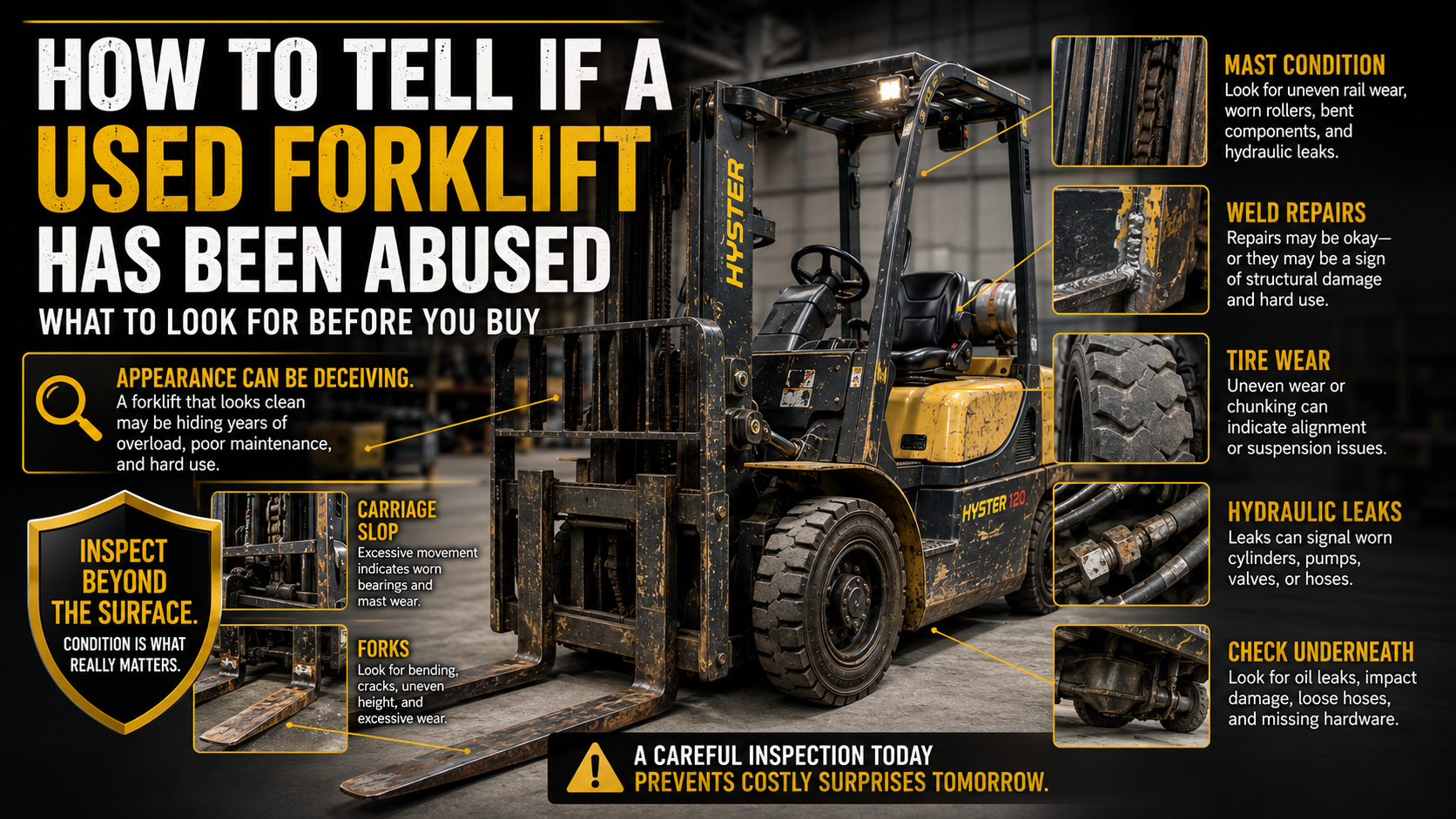
One of the questions I get asked the most is: “How can you tell if a used forklift is a good machine?”
My answer is always the same. Don’t start by looking at the paint.
I’ve inspected forklifts that looked almost brand new but needed tens of thousands of dollars in repairs. I’ve also inspected forklifts with faded paint, scratched body panels, and worn seats that turned out to be some of the best machines on the market.
Appearance can be deceiving.
After evaluating thousands of used forklifts over the years, I’ve learned that the real story is almost always hidden beneath the surface. Here are some of the first things I look for when determining whether a forklift has been well maintained or seriously abused.
The mast does all the heavy lifting. It’s also one of the easiest places to identify excessive wear.
I’m looking for:
A forklift that has spent years overloaded usually tells the story right here.
Lift chains don’t wear out overnight. They wear gradually over thousands of lift cycles.
Things I look for include:
Replacing lift chains on larger forklifts can become an expensive repair very quickly.
Grab the carriage. Try to shake it. Does it feel tight? Or does it rock excessively?
Too much movement can indicate:
This isn’t something you’ll notice from across the parking lot. You have to physically inspect it.
This is one of my biggest red flags. Repairs aren’t automatically bad. Quality repairs happen every day.
But I pay close attention to repairs on:
Poor welds often tell me the truck experienced significant damage at some point in its life. Then I ask: Why did it need to be repaired? Repaired welds often lead to significant damage, often through overloading. This typically indicates that other parts of the unit have seen very rough use even if you can’t spot the signs. Also, who the repairs were completed by matters greatly as well. There’s a big difference between a random shop down the street and a factory certified shop that specializes in these repairs.
Tires are surprisingly informative. Uneven wear patterns may indicate:
Chunking and severe sidewall damage often suggest the truck has spent years operating in harsh environments. One quick look at the tires can reveal a lot about how the forklift has been used.
Forks are consumable items. But they also provide valuable clues.
Look for:
A forklift with damaged forks may have spent years lifting loads beyond its intended capacity. There are plenty of signs to watch out for to spot fork wear and tear before it becomes a problem.
Some buyers see a little hydraulic oil and think “That’s an easy fix.” Sometimes it is, sometimes it isn’t.
Hydraulic leaks can originate from:
The leak itself isn’t always the biggest concern. It’s understanding why it’s leaking. This is going to tell you if you have a problem that will cost you a hundred dollars VS thousands.
Most people never do this. They walk around the truck. Drive it. Raise the mast. Then they’re ready to buy. I always want to see underneath.
I’m looking for:
The underside often reveals years of abuse that fresh paint can’t hide. Turn the truck on and leave it running in the same spot unmoving for 10 minutes. When the time is up move the truck and inspect the ground where you had it parked. Do you see any drops or slick spots?
A forklift can tell you a lot before it ever moves.
Listen for:
Experienced technicians often identify problems with their ears before they ever pick up a wrench.
This may surprise some buyers. A fresh coat of paint doesn’t increase the value of a forklift at all. Nor does it increase its reliability. In fact, I become more observant when I see a freshly painted truck.
Why? Because paint can hide:
I’m not saying fresh paint is bad. I’m saying it shouldn’t influence your buying decision. The mechanical condition is what matters.
Whenever possible, I ask for documentation.
Things like:
A forklift with documented maintenance history is usually a safer investment than one with no history at all. Good records tell me the previous owner cared about the equipment.
Most abused forklifts don’t advertise that they’ve been abused. The clues are subtle. You have to know where to look.
That’s why two forklifts with the same year, model, capacity, & hours can have dramatically different values. One may provide years of reliable service. The other may become a repair project from day one.
Special Note: If you’re still reading, like and share. It’s appreciated. If you’re considering purchasing a used forklift and would like an experienced second opinion, I’d be happy to help review the machine, discuss potential concerns, and make sure you’re investing in equipment that will keep your operation running—not create unexpected repair bills. Send me a message.
Jason Flaska
Forklift Exchange
📞 630-842-0779
📧 jasonf@forkliftexchange.com
#UsedForklifts #ForkliftInspection #MaterialHandling #WarehouseOperations #IndustrialEquipment #ForkliftMaintenance #ForkliftExchange
Comments are closed