
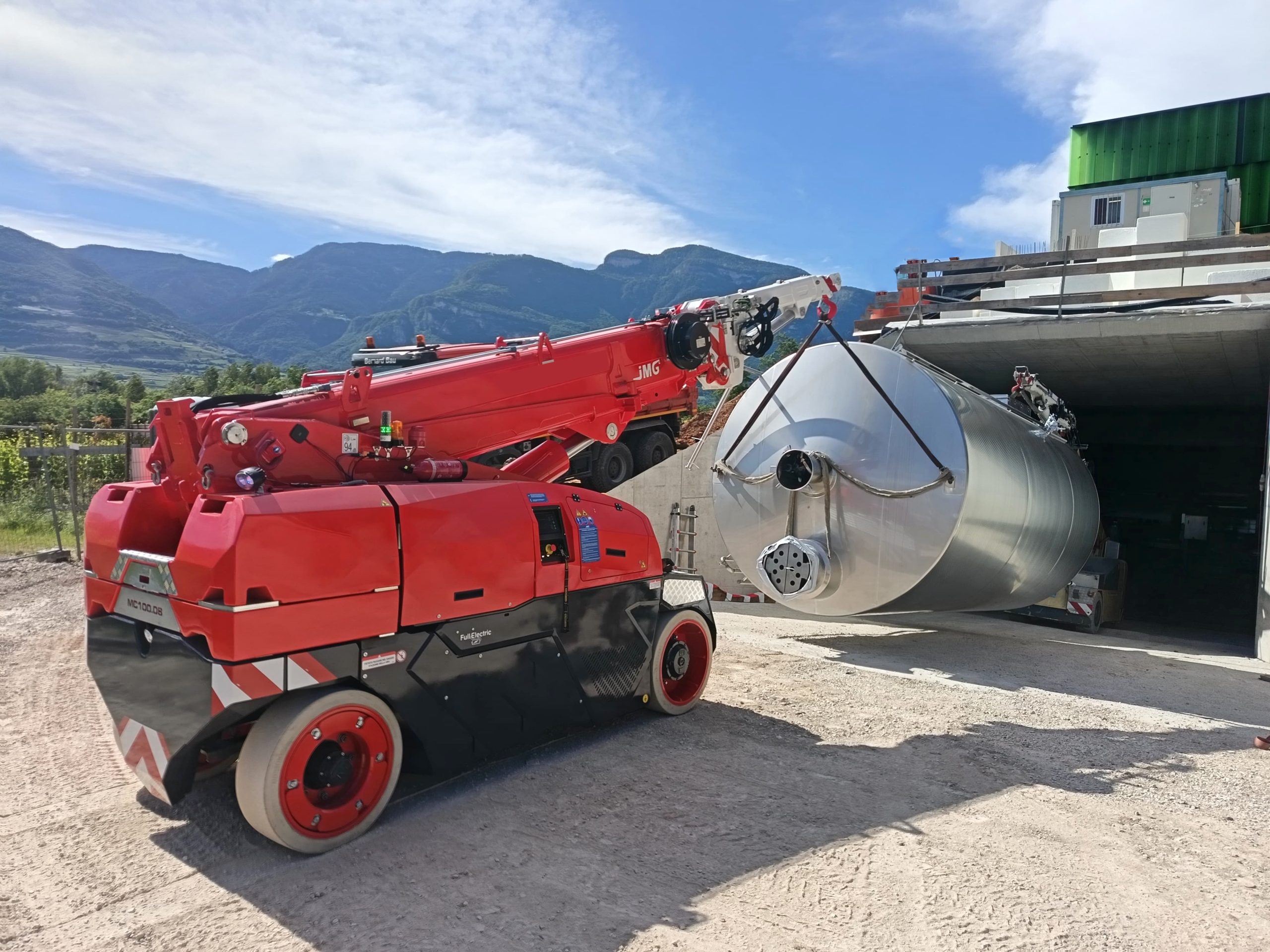
A JMG crane demo gives your team the opportunity to see how a compact electric pick-and-carry crane performs under real working conditions. Rather than relying only on specifications, brochures, or videos, you can evaluate the crane’s maneuverability, lifting control, operator visibility, and suitability for your facility.
JMG electric cranes are designed for industrial environments where space, precision, and clean operation matter. They can be particularly valuable for machinery moving, plant maintenance, manufacturing, warehousing, equipment installation, aerospace work, and other demanding material-handling applications.
Here is what you can expect during a demonstration—and how to get the most value from the experience.
A JMG crane demo is a hands-on equipment presentation conducted by a knowledgeable specialist. It allows operators, safety personnel, maintenance teams, and decision-makers to inspect the machine and observe its capabilities firsthand.
Depending on the crane model and demonstration site, the session may include:
The goal is not simply to show that the crane can lift a load. It is to determine whether the machine matches your working environment, load requirements, production demands, and safety procedures.
One of the most important benefits of a JMG crane demo is seeing how much lifting capability can fit into a compact footprint.
Traditional cranes may require substantial setup space, while a forklift may not provide the control needed for suspended or unusually shaped loads. A JMG electric pick-and-carry crane is designed to help fill that gap.
During the demonstration, pay attention to how the crane:
This practical test can reveal whether the crane can work efficiently in areas where larger lifting equipment would be difficult to position.
Heavy lifting is only part of the job. In many industrial applications, precise positioning is just as important as capacity.
A demonstration allows your operators to observe how smoothly the machine responds to control inputs. This is especially useful when placing machinery, removing components, completing maintenance work, or handling valuable equipment.
Ask the equipment specialist to demonstrate movements that resemble your normal tasks. These could include raising and lowering the boom, extending or retracting it, traveling with a suspended load, or positioning a load near an obstruction.
Seeing these movements firsthand will help your team evaluate whether a JMG crane could improve control during demanding lifts.
Selected JMG crane models offer remote-control functionality. During a JMG crane demo, the specialist can explain which functions are available remotely and how the system is used.
Remote operation can allow an operator to choose a viewing position with better visibility of the load, travel path, and surrounding work area. However, the operator must still follow the manufacturer’s requirements and all applicable workplace safety procedures.
During this part of the demonstration, evaluate:
The demonstration is also a good time to discuss operator familiarization and training requirements.
JMG cranes use battery-electric power, providing an alternative to diesel-powered lifting equipment in indoor or emission-sensitive environments.
Electric operation can be beneficial inside manufacturing facilities, warehouses, food-production environments, clean facilities, and other buildings where exhaust fumes and engine noise may create operational concerns.
During the demonstration, your team can evaluate the machine’s sound level and how its electric drive responds during travel and lifting. You can also discuss charging requirements, expected operating time, battery maintenance, and how the crane could fit into your existing work schedule.
Actual operating time will depend on the crane model, battery configuration, load demands, travel distance, and working conditions. Ask for model-specific information instead of relying on a general estimate.
Every lift begins with understanding the load. A crane’s rated capacity changes according to factors such as load distance, boom position, attachment configuration, and machine setup.
A qualified specialist should explain how to read the load chart for the machine being demonstrated. Bring information about the loads you regularly handle, including:
Photos, drawings, and equipment specifications can also help the specialist understand your application.
Never assume that maximum rated capacity applies in every configuration. The demonstration should help your team identify the correct model and setup for the intended work.
A JMG crane demo gives your organization a practical basis for comparing the crane with forklifts, carry-deck cranes, overhead cranes, or other equipment already in use.
A forklift remains an effective choice for many palletized and fork-supported loads. A pick-and-carry crane, however, is designed to lift and transport suspended loads. That distinction may make it better suited to machinery installation, plant maintenance, tooling changes, and other precision-lifting assignments.
Before the demonstration, identify problems with your current process:
Use the demonstration to explore those specific challenges rather than evaluating the crane in isolation.
For a deeper comparison, read Forklift Exchange’s guide to choosing between a forklift and a pick-and-carry crane.
The right machine is only part of a successful equipment decision. Parts availability, service support, training, attachments, warranty coverage, and long-term maintenance also matter.
Before the demonstration ends, ask about:
Forklift Exchange is an authorized equipment dealer with access to JMG equipment, genuine parts, service resources, and application support. You can explore the available JMG electric crane lineup before your demonstration.
Preparation helps turn a general product presentation into a useful application review.
Invite the people who will be involved in selecting, operating, maintaining, or approving the equipment. This may include operators, maintenance supervisors, safety managers, engineers, production leaders, and purchasing personnel.
If possible, prepare a short list of representative lifts. Record the load weights, dimensions, required reach, travel route, floor condition, and available clearance. Do not conduct a test lift unless the load and lifting method have been reviewed and approved by the appropriate personnel.
You should also prepare questions about attachments, charging, service, training, and any facility-specific requirements.
A JMG electric crane may be a strong option if your operation needs to lift and transport heavy or awkward loads while working within limited space.
Potential applications include:
The best way to determine the right model is to review the complete application—not capacity alone. Floor loading, aisle width, lifting height, reach, attachments, charging access, and the load’s center of gravity can all affect the recommendation.
Bring load weights, dimensions, photos, facility measurements, lifting heights, required reach, and information about your current equipment. The more detail you provide, the more relevant the demonstration can be.
A representative load may be considered if the equipment specialist approves the application and all required site, rigging, and safety conditions are met. Discuss the proposed lift before the demonstration.
JMG cranes are battery-electric and produce no engine exhaust during normal operation. Their compact design can make them suitable for many indoor industrial environments, subject to model specifications, floor conditions, and site requirements.
No. A standard forklift primarily supports loads on forks, while a pick-and-carry crane is designed to lift and transport suspended loads. Some JMG configurations may accept specialized attachments, but the correct setup depends on the application.
Visit the Forklift Exchange JMG equipment page or review information from JMG Cranes for additional manufacturer details.
Specifications can help narrow your options, but seeing a machine work provides a clearer picture of its real-world capabilities.
A JMG crane demo allows your team to evaluate maneuverability, electric operation, control, visibility, and load placement before making an equipment decision. It also gives you an opportunity to review your application with specialists who understand industrial lifting and material handling.
Contact Forklift Exchange to discuss your lifting requirements and schedule a demonstration. Our team can help identify the appropriate JMG crane model, configuration, and attachments for your operation
Jeff Pejsa
Forklift Exchange
216-544-4075
#JMG #CraneDemo #ElectricCrane #PickAndCarryCrane #IndustrialLifting #MaterialHandling #Manufacturing #HeavyEquipment #ForkliftExchange #MachineryMoving
Comments are closed