
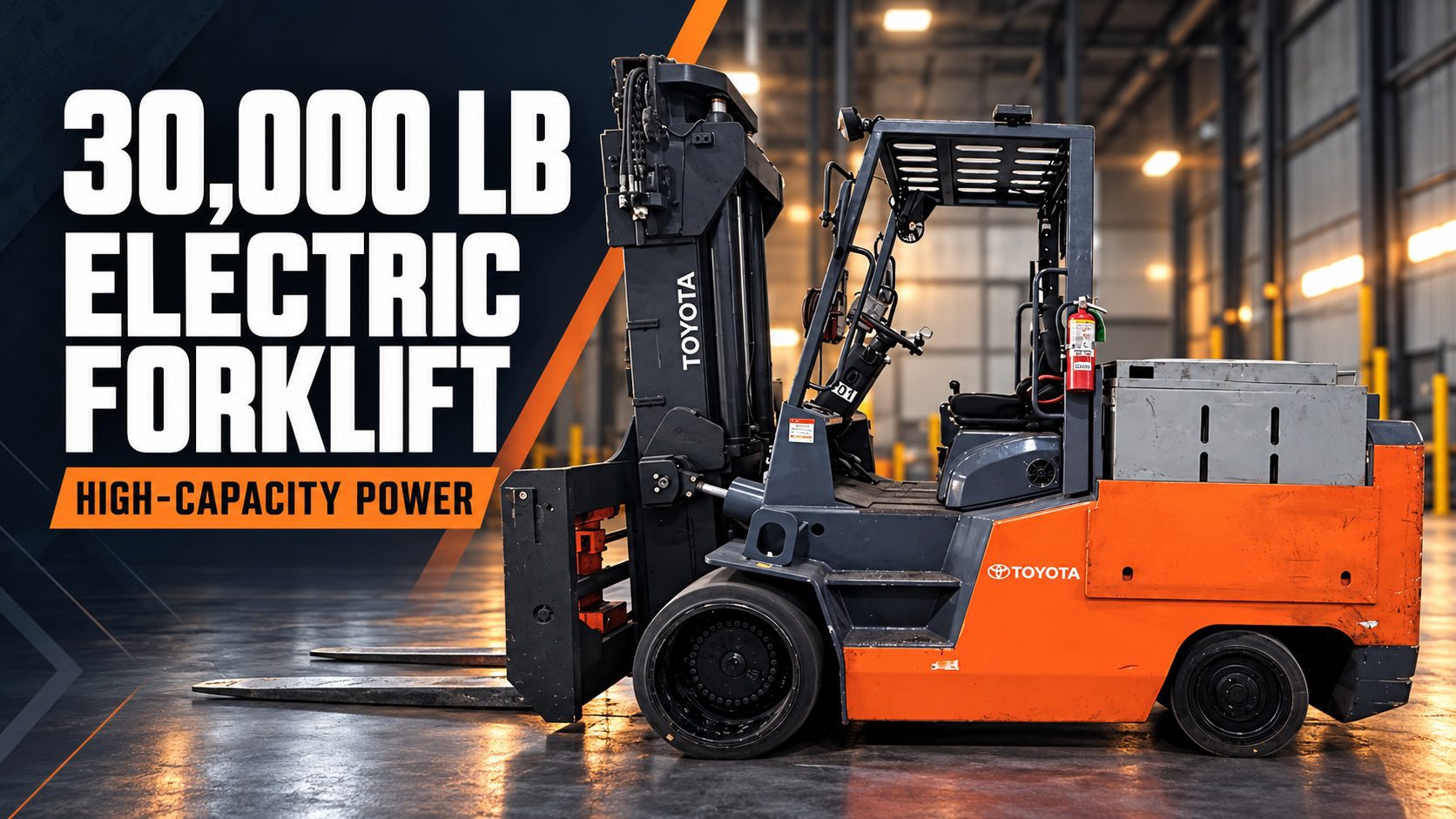
Electric forklifts are nothing new. Not so much when it comes to high-capacity forklifts. Walk into almost any warehouse, and you will find electric lift trucks moving pallets, loading trailers, and working narrow aisles every day.
But once capacity climbs into the heavy-industrial range, the picture changes quickly. A 5,000 lb. electric is common. A 30,000 lb. electric is not.
That is why a machine like the 2021 Toyota THDE3000-30 that recently came into Forklift Exchange is worth paying attention to. With a 30,000 lb. capacity and only 1,610 hours, it is not simply another used electric forklift. It is an example of a category that could become increasingly important as heavy industrial facilities evaluate where electrification makes practical sense.
At lower capacities, electric forklifts have been mainstream for decades. The infrastructure, operator familiarity, and available equipment are already well established.
At 30,000 lbs., buyers are dealing with a very different set of applications. These trucks may be handling steel coils, dies, tooling, large paper rolls, can-making materials, automotive components, or other concentrated loads. The equipment has to deliver high capacity while operating safely and efficiently inside demanding industrial environments.
Historically, many of those jobs have been performed by LP or diesel forklifts. Those power sources are still the right answer for many operations. But electric technology gives some facilities another option – particularly when the truck spends much of its working life indoors.
The most interesting applications are facilities where heavy loads and indoor operation overlap. Plants, automotive manufacturing, steel and coil processing, heavy manufacturing, and similar operations can all fit that profile.
An electric forklift produces no tailpipe emissions at the point of use. In an enclosed plant, that can be meaningful. Noise characteristics are also different from an internal-combustion truck, and companies with broader electrification or emissions-reduction initiatives may see a high-capacity electric forklift as part of that strategy.
The important point is that the decision should be application-driven. A company should not choose electric simply because electric is fashionable. The truck still has to do the job.
High-capacity applications can be demanding, and several factors have to be evaluated before changing power sources. Duty cycle matters. Battery capacity and charging infrastructure matter. Shift schedules, available charging windows, operating environment, attachment requirements, and the way the load is handled all matter.
A diesel or LP forklift may remain the better choice for an operation that runs long shifts, works outdoors, needs rapid refueling, or has operating conditions that do not fit the available electric infrastructure.
The real question is not whether electric is better than internal combustion. It is whether electric is better for a particular application.
This may be the most interesting part of the story.
If a company needs a used 5,000 lb. electric forklift, there are plenty of choices. Dealers, rental fleets, and end users have been buying and selling them for years.
Try the same search for a good used 30,000 lb. electric forklift and the market becomes much smaller. There simply have not been enough high-capacity electrics placed into service over the years to create the same depth of used inventory.
That limited supply can make the right machine particularly interesting. A buyer that already knows a 30,000 lb. electric fits its operation may not see another comparable used truck immediately.
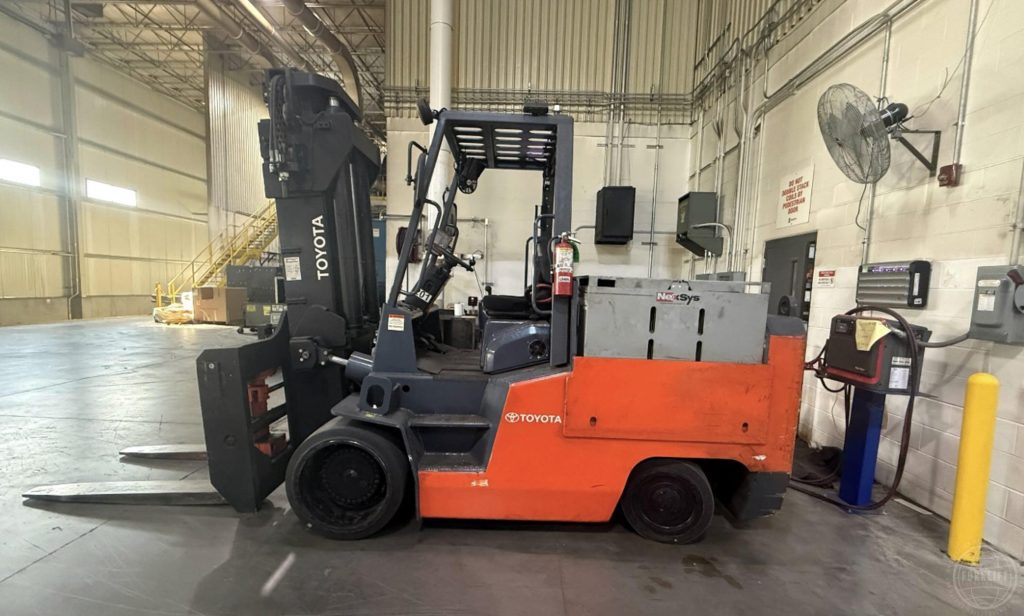
The Toyota currently available through Forklift Exchange is a good example of what makes this segment unusual. It combines high capacity, electric power, and relatively low hours in a configuration that is difficult to find on the secondary market.
| Model | 2021 Toyota THDE3000-30 |
| Capacity | 30,000 lbs. |
| Hours | 1,610 |
| Mast | 103.5 in. lift / 112.7 in. lowered height |
| Attachment | Side shift and fork positioner (SSFP) |
| Tires | Brand-new cushion tires |
| Condition | Machine runs great |
For the right plant, that combination can provide a path into high-capacity electrification without waiting for a new machine to be built. Just as importantly, it gives us a real-world look at what the used market may begin to look like as more heavy-duty electric equipment enters service.
I do not expect diesel and LP high-capacity forklifts to disappear. There are too many applications where they remain practical, productive, and proven.
But I do expect buyers to ask more questions about electric as technology, charging infrastructure and corporate operating priorities continue to evolve. In some plants, electric will make sense. In others, it will not.
What will be interesting to watch is the secondary market. If more 20,000, 30,000, and higher-capacity electric forklifts enter service, used buyers will eventually have more choices. Today, however, a good 30,000 lb. electric remains unusual enough to stand out.
And when a rare configuration also has low hours and the right specifications, it can create an opportunity for the industrial buyer who has already decided that electric fits the job.
Forklift Exchange buys and sells high-capacity forklifts for industrial applications throughout the country. If you are evaluating electric, LP, or diesel equipment and want to discuss what makes sense for your application, I would be happy to talk.
Gene Bayer
National Account Manager
Forklift Exchange, Inc.
847-707-1316
gbayer@forkliftexchange.com
Comments are closed